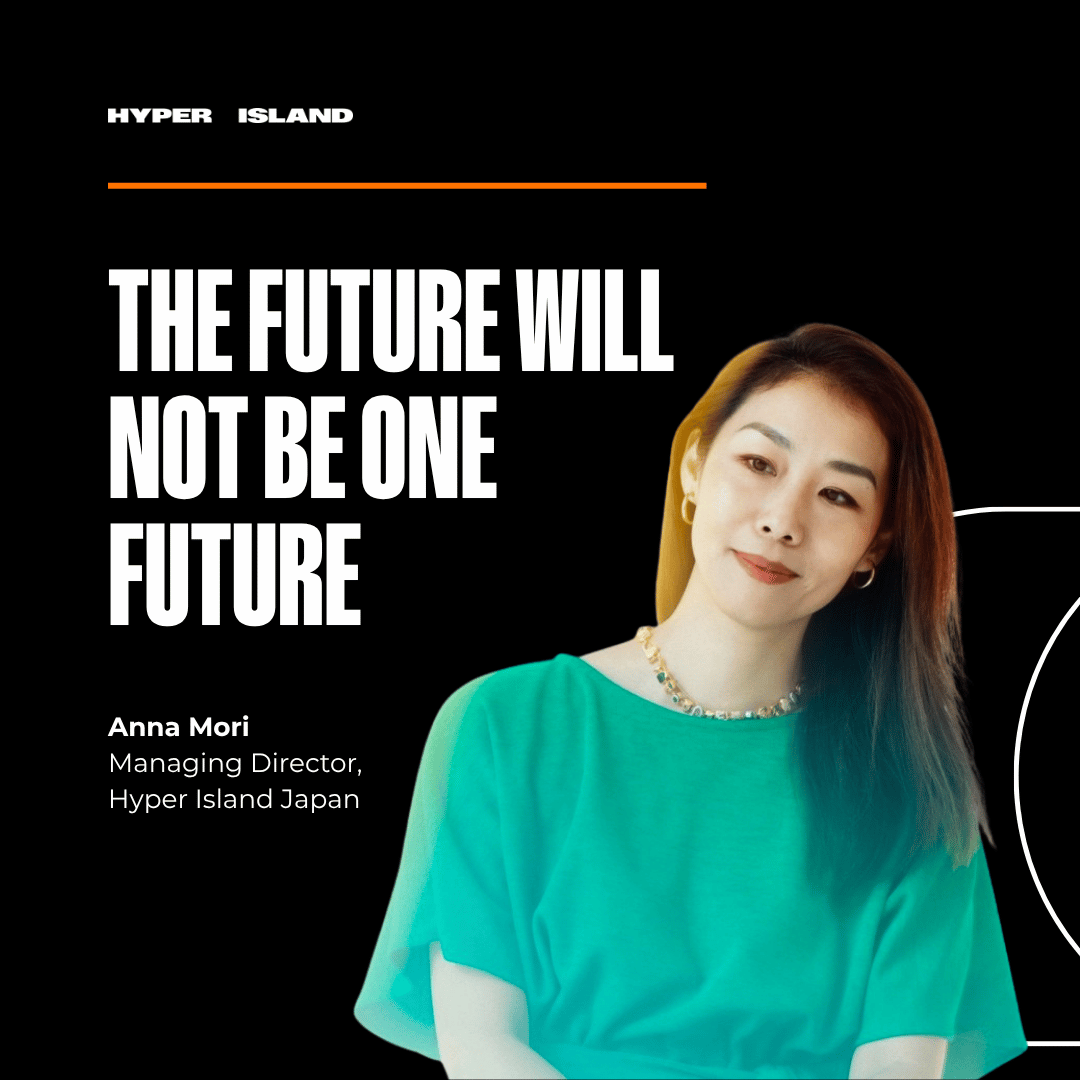
A perspective from Asia on the next 30 years
In Tokyo, you might start your morning by visiting a centuries-old shrine, stop at a convenience store and pay at a self-checkout, then arrive at the office to exchange business cards and approve documents with a physical stamp.
None of this feels unusual. It is simply everyday life.
And perhaps that tells us something important about the future: we are not all moving towards the same one.
From my perspective in Japan, and through our work across the region, it is clear that multiple futures already coexist.
Across Asia, the contrasts are striking. Japan and South Korea are navigating ageing populations and shrinking workforces, while India and much of Southeast Asia have younger populations and rapidly growing economies. Some cities are pushing the boundaries of automation and digital infrastructure, while other places are developing along very different paths. Long-held traditions sit comfortably alongside technologies that would have seemed impossible only a generation ago.
Perhaps this is one of the most useful insights we can take from looking at the future through an Asian lens: the future will not arrive as a single destination.
It will be plural, uneven and sometimes contradictory.
From knowing to adapting
For much of the last century, organisations could build an advantage by knowing more.
Knowledge was difficult to acquire. Expertise took years to develop. Best practices could be studied, codified and transferred from one organisation or market to another.
AI is changing this equation.
Knowledge is becoming abundant, and analysis is becoming faster. What once required specialised expertise is increasingly accessible to almost anyone.
But knowing more does not necessarily mean understanding better.
In a world where answers become cheap, the ability to recognise what matters becomes more valuable.
The shift, then, is from knowing to sensing and adapting.
Can we notice when the environment has changed? Can we question assumptions that once served us well? Can we act before we have certainty?
These questions feel particularly relevant when working across Asian markets. An approach that succeeds in Singapore may fail in Japan, while what works in Tokyo may make little sense in Jakarta or Mumbai.
There is no single playbook for such diversity.
The courage to unlearn
This brings me to a capability I believe will become increasingly important: unlearning.
We often talk about the need to learn new skills. But for established organisations, the harder challenge may be letting go of what has worked before.
The hardest thing to change is not always what failed us.
It is what made us successful.
This is something I see particularly clearly in Japan, where I have watched organisational strengths become both a source of resilience and a barrier to change.
Many organisations here have been built on extraordinary strengths: precision, quality, expertise, reliability and carefully designed processes. These capabilities have created enormous value.
But success creates its own gravity.
Processes become rules. Experience becomes certainty. Expertise becomes identity. And eventually, what once made an organisation strong can make it difficult to move.
The next 30 years will require us not only to learn, but to learn, unlearn and relearn — repeatedly.
Becoming more human
There is another paradox ahead.
As technology becomes more capable, the question is not simply what it can do, but what remains uniquely ours to do.
If AI can generate answers, perhaps our value lies increasingly in asking better questions.
If machines can optimise, perhaps it is up to humans to decide what is worth optimising.
If information becomes infinite, judgment becomes scarce.
And as technology accelerates everything around us, reflection, curiosity, empathy and collaboration may become more important, not less.
The more intelligent our technology becomes, the more human our organisations need to become.
For 30 years, Hyper Island has never really been about teaching people what the future will be. The world changes too quickly for that.
Instead, we have focused on helping people and organisations build the capacity to meet change: to question, reflect, experiment, collaborate and adapt.
Looking towards the next 30 years from Japan, and through our work across Asia, that capacity may matter more than ever.
Because the future will not be one future.
And the next 30 years will not ask us to predict it.
They will ask us to become better at meeting it.

WANT TO GET NOTIFIED ABOUT OUR EVENTS?
Join our mailing list for tips, events, and opportunities.
.png)