
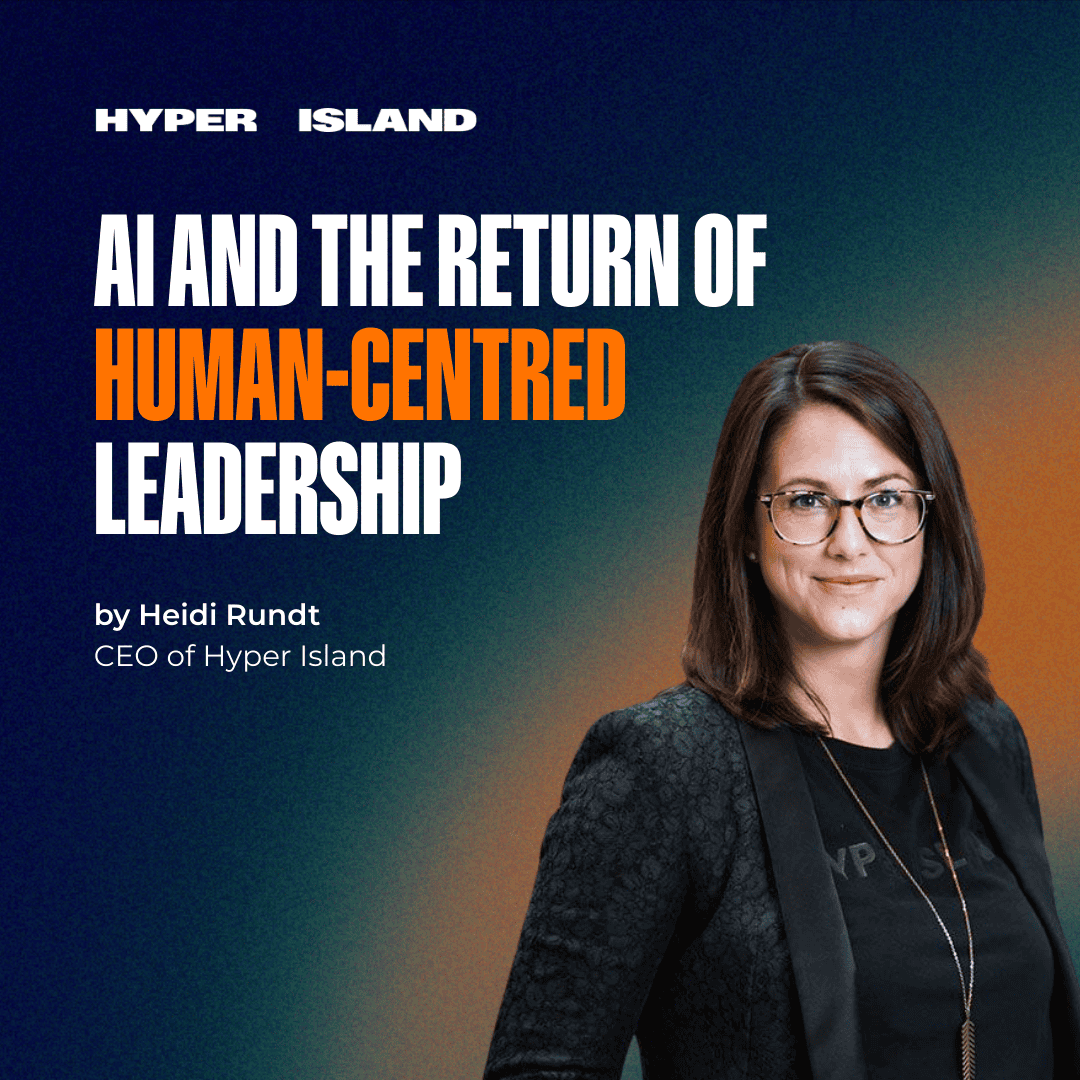
AI is changing how work gets done, but more quietly, it is changing what leadership is for.
As more logic, speed, and pattern recognition are handled by machines, something else comes into focus: the uniquely human work of leadership. Not as control, but as orientation. Not as certainty, but as judgement. Not as output, but as meaning.
This is not a loss of relevance. It is an expansion of possibility.
AI doesn’t lead. It doesn’t care. It doesn’t decide what matters. What it does instead is create space. Space that leaders can choose to fill with clarity, trust, and direction.
In organisations where leadership steps into that space, AI becomes a powerful enabler. It frees time for learning, collaboration, and reflection. It supports better decisions by widening the option space. It allows teams to move faster without losing coherence.
But this only happens when leadership is intentional.
AI tends to amplify what already exists. In cultures where curiosity, trust, and responsibility are present, AI strengthens them. In environments where people feel safe to question and contribute, AI becomes a shared thinking partner rather than a silent authority.
This is where leadership shows its potential.
Leadership after AI is not about having all the answers. It is about shaping the conditions in which good answers can emerge. Creating norms for when to trust technology, and when to pause. Helping teams develop judgement, not dependency. Making space for disagreement, sensemaking, and learning.
Importantly, this is also a deeply human opportunity.
As AI takes on more operational load, leaders can reinvest attention in the things that have always driven long-term value: relationships, psychological safety, purpose, and growth. The conversations that don’t fit neatly into a dashboard. The moments where people reconnect to why their work matters.
Strategy, too, becomes more human. AI can generate scenarios, but leadership decides which futures are worth pursuing. AI can suggest actions, but leadership holds responsibility for consequences.
The organisations that thrive won’t be the ones that adopt fastest, but the ones that lead most consciously. Those that see AI not as a shortcut, but as an invitation: to upgrade how they decide, collaborate, and care.
This is a moment to expand what leadership can be. Sometimes progress isn’t about doing more, but about leading differently.
If you’d like to explore these ideas more deeply, you can listen to Anna, Beni and myself discussing leadership after AI in this recorded webinar. Reflecting on culture, judgement, trust, and what leadership can become in an AI-powered world.

WANT TO GET NOTIFIED ABOUT OUR EVENTS?
Join our mailing list for tips, events, and opportunities.